
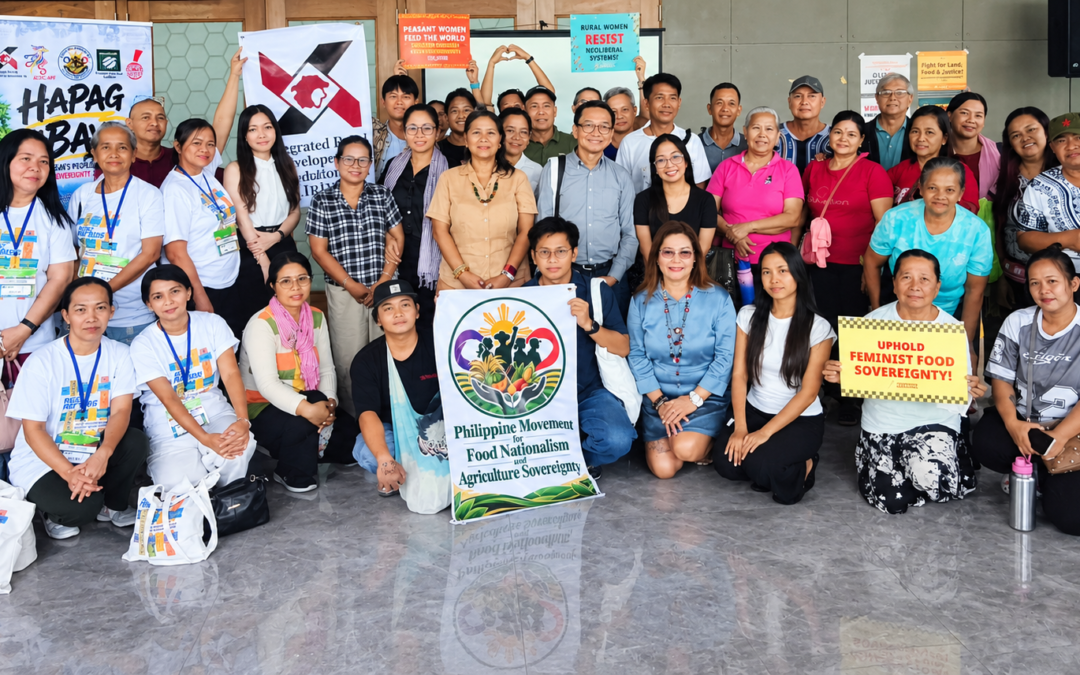
QUEZON CITY, Philippines — October 28, 2026 — The Integrated Rural Development Foundation, Inc. (IRDF), drawing on decades of work with rice and coconut farmers, fisherfolk, rural women and marginalized communities, brought grassroots development experience into regional discussions on food sovereignty and climate justice at the 2026 ASEAN Civil Society Conference/ASEAN People’s Forum (ACSC/APF).
IRDF organized the Hapag ng Bayan: ASEAN’s People’s Gathering for Food Sovereignty and Climate Justice, on October 28, 2026 at the Quezon City Hall Compound, where farmers’ organizations, community advocates, civil society groups and regional representatives called for far-reaching reforms to protect food producers, strengthen local food systems and confront the climate crisis.
The gathering culminated in the Declaration on Food Sovereignty, Agroecological Transformation, and Climate Justice, a people’s manifesto advocating genuine agrarian reform, fair prices for farmers, sustainable agriculture, democratic participation in food policy and stronger solidarity among ASEAN communities.
With its longstanding partnerships with rice and coconut farmers and other rural communities, IRDF underscored the importance of bringing the experiences and demands of food producers into national and regional policy discussions.
IRDF Brings Grassroots Leadership to the Regional Food Sovereignty Movement
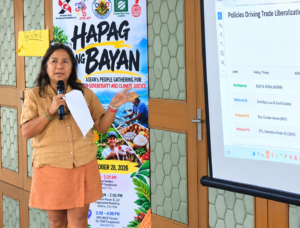
Arze Glipo, convenor of the Philippine Movement for Food Nationalism and Agriculture Sovereignty (PMFNAS) and the Asia-Pacific Network for Food Sovereignty and Dr. Rene Ofreneo, PMFNAS co-convenor, and Professor Emiritus, University of the Philippines, reflected its continuing commitment to rural communities whose livelihoods depend on access to productive land, affordable agricultural inputs, fair markets and protection from the effects of extreme weather.
Partner farmers and representatives of farming, fishing and rural women’s organizations were part of the broader gathering, reinforcing the principle that agricultural policies must respond to the actual conditions experienced by the people who produce food.
Regional Voices Warn of Climate Crisis and Unequal Food Systems
Presentations highlighted how climate-related disasters, insecure land tenure, rising production costs and concentrated corporate control can deepen the difficulties faced by small-scale food producers.
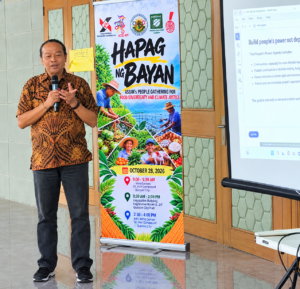
Anwar “Sastro” Ma’ruf, Secretary General of Indonesia’s KPRI, discussed concerns involving land access, agrarian reform, workers’ livelihoods and social protection. His presentation also emphasized the importance of agroecology, local food systems and stronger participation by women and young people in community decision-making.
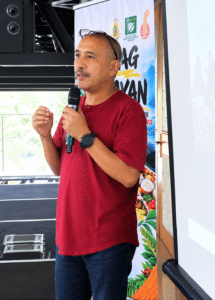
Mr. Val Vibal of the Philippine Movement for Climate Justice (PMCJ) warned that Southeast Asia faces increasingly serious climate-related threats, including super typhoons, floods, extreme heat and drought. He argued that addressing the crisis requires more than adaptation programs and regional declarations. It also requires examining agricultural production systems, land-use conversion and the economic structures shaping food production. He called for a shift away from monocropping and industrial-dependent agriculture toward agroecological production, alongside stronger safeguards against environmentally destructive land conversion and extractive activities.
The central argument was that climate resilience and food security must be addressed together, with communities playing a meaningful role in changing the systems that determine how food is produced and distributed.
The forum examined the growing influence of multinational corporations across agricultural supply chains, from production and processing to marketing, distribution and logistics.
Mr. Jayson Cainglet, Executive Director of SINAG described how corporate consolidation is changing the competitive landscape for farmers and rural businesses across Asia. He emphasized that the challenge increasingly extends beyond competition between small and large farmers. It also involves the ability of transnational companies to control multiple stages of the food supply chain, potentially weakening the position of independent producers and local enterprises.
These concerns complemented the declaration’s call for stronger public oversight, cooperative marketing, fair agricultural prices and food distribution systems that connect farmers more directly with consumers. For the Philippines, the discussion highlighted the importance of protecting domestic food production while ensuring that farmers receive fair returns and consumers have access to affordable, nutritious food.
Declaration Demands Concrete Agricultural Reforms
The Hapag ng Bayan forum culminated with a declaration that identified food sovereignty, genuine agrarian reform, agroecology and democratic governance as essential foundations for addressing food insecurity, rural poverty and climate vulnerability.
Its key demands include:
- Fair farmgate prices: Strengthen government procurement and establish price mechanisms that provide farmers with a fair return above production costs.
- Genuine agrarian reform: Protect land rights, improve access to agricultural land and prevent the displacement of farmers and indigenous communities.
- Sustainable agricultural production: Expand agroecological practices, farmer-managed seed systems, soil regeneration and alternatives to excessive dependence on costly chemical inputs.
- Stronger local food systems: Develop cooperative-managed food terminals, direct farmer-to-consumer distribution and community-based food reserves.
- Climate justice: Protect agricultural ecosystems and ensure that farmers, fisherfolk, rural women and other affected communities participate in climate and agricultural decision-making.
- Democratic governance: Give food producers and civil society organizations a stronger voice in the formulation of agricultural policies and the allocation of public resources.
The manifesto also called for reviewing and rolling back agricultural tariff reductions and trade policies that are harmful to domestic producers, including measures affecting staple crops.
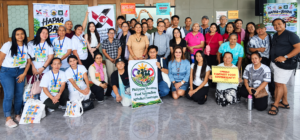
The gathering of more than 50 food sovereignty advocates, farmer, women and youth leaders proposed building an ASEAN Peoples’ Food Sovereignty Alliance to coordinate regional campaigns, support agroecological knowledge exchanges and promote alternative food reserves based on solidarity rather than commercial competition alone. Calling for stronger cooperation, the group intends to connect the struggle for affordable food in urban communities with the demand for fair farmgate prices, secure livelihoods and agrarian justice in rural areas.
IRDF Reaffirms Its Commitment to Farmers and Rural Communities
For IRDF, its participation in the ACSC/APF 2026 events placed its decades of rural development work within a broader regional effort to defend the rights and livelihoods of food producers. Its partnerships with rice and coconut farmers, fisherfolk, rural women and other communities reinforce the importance of grassroots participation in shaping solutions to agricultural insecurity, climate disruption and rural poverty. The event also highlighted the need to recognize farmers not simply as agricultural laborers or suppliers of raw materials, but as essential partners in building resilient food systems and sustainable rural economies.
The message emerging from Hapag ng Bayan is clear: food sovereignty requires more than producing enough food. It demands fair livelihoods for farmers, secure access to land and resources, sustainable agricultural practices and a decisive role for communities in determining the future of their food systems.
Through its continuing engagement with rural communities and the broader food sovereignty movement, IRDF stands among the civil society organizations working to ensure that the voices of Filipino farmers and other food producers are heard in the pursuit of a fairer, more sustainable and climate-resilient ASEAN.#